The Tail Game workshop was an experiential, sport-based educational activity designed to introduce students to fundamental environmental concepts such as biodiversity, food chains, and ecosystem balance. Implemented within the KA2 STELLA Project, the activity used movement, play, and role-playing to help students understand the interconnected roles of species in nature. By transforming the playground into a living ecosystem, the workshop offered an engaging and accessible way to explore environmental sustainability through non-formal learning.
Objectives:
The objective of this workshop was to introduce students to key environmental concepts such as biodiversity, food chains, and ecosystem balance through sport-based and non-formal learning methods. The activity aimed to use physical movement and play to help students understand the interconnected roles of different species in nature.
Desired outcomes:
- Understand the basic structure of a food chain
- Recognize the importance of each species within an ecosystem
- Learn about biodiversity and ecological balance through experiential learning
- Engage actively and positively with environmental topics through play
Description and Implementation:
As part of the KA2 STELLA Project (Sport as a Tool for Environmental Sustainability Learning), a series of workshops were implemented in schools, inspired by the Training of Trainers held in Malta. One of these activities was The Tail Game, which took place with students from the General Lyceum of Molos.
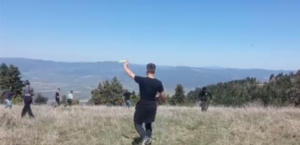
During the activity, the playground was transformed into a lively ecosystem. Each student represented an animal within the food chain, such as rabbits, foxes, and eagles. Students wore tails to symbolize their role in nature’s cycle. Through playful chases and movement-based interaction, students experienced predator–prey relationships in a dynamic and engaging way.
Educators facilitated discussions during and after the activity, helping students reflect on biodiversity, co-existence, and the importance of maintaining a balanced ecosystem.
Feedback:
The students were highly engaged throughout the activity and expressed excitement and enjoyment. Many students commented that they liked learning through games and movement and were surprised by how a simple game could teach them about nature, animals, and environmental sustainability. The playful format helped maintain motivation and active participation.
Conclusion and Recommendations:
Overall, The Tail Game workshop successfully demonstrated the effectiveness of sport-based and non-formal education methods in supporting environmental learning among school-aged students. The high levels of engagement, cooperation, and understanding observed confirm that physical play can simplify complex ecological concepts and stimulate curiosity. The experience provides valuable insights for the wider STELLA project, highlighting the importance of age-appropriate adaptations and dedicated reflection time to reinforce learning and maximize the educational impact of similar activities in future school-based interventions.