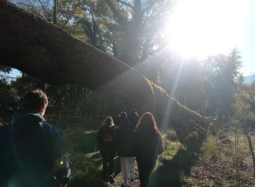
The Acorn Spoon Race Game workshop was a playful, experiential learning activity implemented at K.E.PE.A. Stylidas-Hypatis as part of the KA2 STELLA Project. The activity aimed to introduce students to environmental sustainability by combining physical movement with ecological storytelling. Through a simple yet meaningful game inspired by the role of squirrels in reforestation, participants explored how small actions can contribute to broader environmental impact while developing teamwork, coordination, and problem-solving skills.
Objectives:
The objectives of this event were to teach students about environmental sustainability through a playful activity, to demonstrate the ecological role of squirrels in reforestation, to combine physical activity with experiential learning, and to encourage teamwork, coordination, and problem-solving among students.
Desired outcomes:
- Students will understand that small actions, like squirrels hiding acorns, can have a large environmental impact.
- Students will experience how play can be used as a learning tool for sustainability.
- Participants will develop an appreciation for the connection between individual actions and broader ecological systems.
- Teachers and facilitators will gain experience in using playful, interactive methods to teach sustainability.
Description and Implementation:
During the activity, students carried acorns on spoons to fill their team’s “nest” in the gymnasium. After each round, students discussed how squirrels contribute to reforestation by hiding and forgetting acorns, linking this to human actions that support environmental sustainability. The activity was adapted from the STELLA Manual to include a reflection phase emphasizing the metaphor of “small actions creating big impacts,” combining coordination, teamwork, and learning through play.
Feedback:
Students found the game both entertaining and challenging, remaining fully engaged throughout. Many expressed surprise at the connection between squirrels’ behaviors and tree growth. Educators highlighted that the activity successfully bridged physical activity with environmental learning. Overall, participants appreciated the metaphor of small actions leading to meaningful change and connected it to real-life sustainability behaviors such as planting trees or reducing waste.
Conclusion and Recommendations:
The Acorn Spoon Race Game workshop successfully demonstrated how playful, sport-based activities can effectively communicate sustainability concepts to young learners. High levels of engagement, curiosity, and reflection confirmed that experiential learning supports deeper understanding of ecological interconnections. For the wider STELLA project, this activity highlights the value of using clear metaphors and age-appropriate games to make environmental education joyful, accessible, and impactful, reinforcing the idea that meaningful environmental change often begins with small, everyday actions.