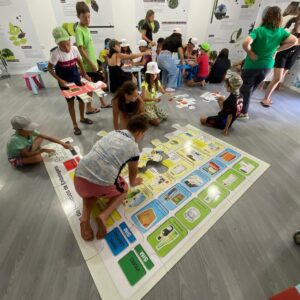
The Zero-Waste Chef workshop was a sport-based, non-formal learning activity implemented on 21/08/2025 at the Centro de Arte e Desporto Inclusivo in Braga. Designed for young participants, the workshop focused on sustainable nutrition, food waste reduction, and healthy eating in the context of sports performance. By combining physical challenges with creative meal-planning tasks, the activity encouraged participants to reflect on the environmental impact of food choices while strengthening teamwork, critical thinking, and environmental responsibility, in line with the objectives of the STELLA project.
Objectives:
- To increase awareness among young people about food waste and sustainable nutrition.
- To promote healthy eating habits that align with athletes’ nutritional needs while focusing on sustainability.
- To foster creative thinking and teamwork in addressing environmental challenges, particularly those related to daily food practices.
- To show how leftover foods can be transformed into valuable resources for performance nutrition.
- To inspire youth to make environmentally responsible food choices through interactive, sports-based learning.
Desired Outcomes:
- Enable participants to understand the connection between food waste and sustainability in sports.
- Equip them with creative strategies to reduce food waste in their households and sports routines.
- Encourage critical thinking about nutrition for athletes using accessible and real-life examples.
- Provide practical experience through a fun, physical, and collaborative learning environment.
- Motivate young people to adopt zero-waste practices and healthy eating habits in daily life.
Description and Implementation:
While the original activity concept centered around sustainable food and cooking education, we adapted it by integrating physical challenges into the learning process. Participants had to perform sports-based tasks (e.g., rope skipping, hula-hooping, squats) before earning quiz questions or ingredients lists, making the experience more engaging and connected to the sports theme of the STELLA project. The sport element not only made the session more active and fun but also reinforced the connection between healthy eating and athletic performance. Another adaptation was the “Imaginary Cooking” element—participants didn’t cook the meals but designed them from hypothetical leftover ingredients. This allowed for greater flexibility in venue, safety, and hygiene, while still achieving educational goals.
Feedback:
Positive Reactions:
- Participants loved the combination of physical activity with sustainable food education.
- The game-like structure of answering quiz questions after sports challenges added fun and engagement.
- Many appreciated learning how everyday leftovers could become athlete-focused meals.
- The group work fostered strong cooperation and encouraged participants to think creatively about nutrition.
Suggestions for Improvement:
- Some participants expressed interest in doing an actual cooking session in the future.
- A few recommended giving more visual materials about the nutritional values of different foods.
- Others asked for more examples of how professional athletes incorporate zero-waste practices into their diets.
Conclusion and Recommendations:
The Zero-Waste Chef workshop successfully demonstrated how sustainability education can be enhanced through playful, sport-based approaches. Participants showed high levels of engagement, creativity, and awareness, particularly in connecting food waste reduction with athletic performance and daily habits. The experience provided valuable insights for the wider STELLA project, highlighting the effectiveness of integrating movement, teamwork, and practical reflection into environmental education. With the addition of hands-on cooking elements, visual learning tools, or local expert involvement, future iterations of this workshop could further strengthen its impact and replicability across different contexts.