
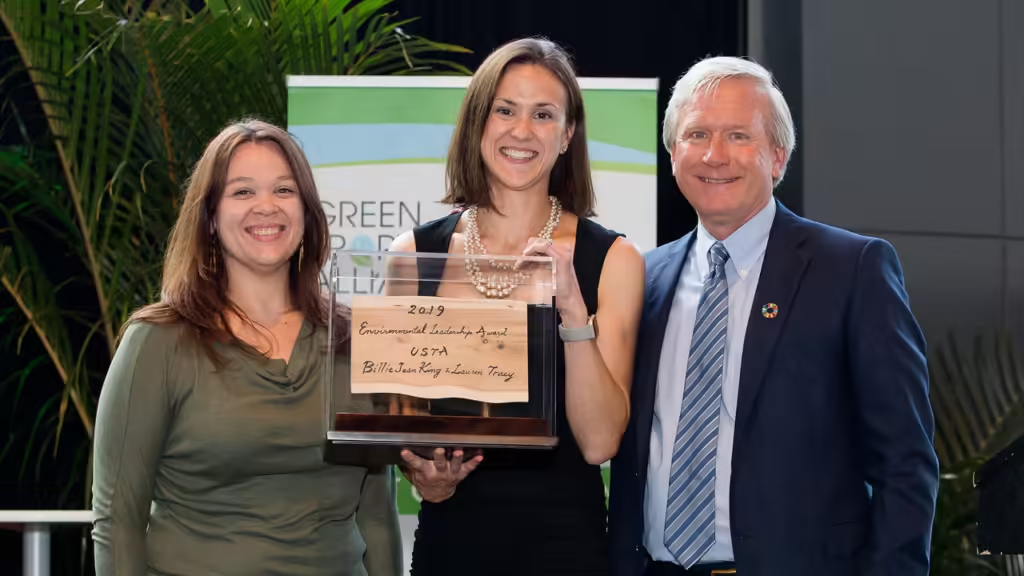
The US Open Tennis Championships, one of the four Grand Slam tournaments, is renowned for combining elite tennis with sustainability. Held annually in New York with over 700,000 attendees, the United States Tennis Association (USTA) launched the Sustainable Venues Initiative to reduce waste, energy consumption, and carbon emissions. Utilizing eco-friendly materials and renewable energy, the program sets a global standard for sustainable sporting events.
Objectives
- To minimize environmental impact through sustainable venue management, waste reduction, and energy efficiency
- To promote environmental stewardship
Description of the Practice:
The Sustainable Venues Initiative at the US Open incorporates a range of eco-friendly practices to reduce the event’s environmental footprint. The tournament is powered entirely by renewable energy credits, with energy-efficient upgrades like LED lighting significantly lowering electricity consumption. LEED-certified projects emphasize recyclable materials and natural ventilation, while a comprehensive waste management program achieves a 97% diversion rate through recycling, composting, and the use of digital tickets and eco-friendly packaging. The organizers have reduced plastic waste with reusable cups, compostable food packaging, and refill stations. They also minimize water usage without compromising tournament standards by water-saving technologies, such as low-flow fixtures and smart irrigation. Additionally,the educational campaigns were set up.
Impact and Results:
The US Open has achieved a 97% waste diversion rate from landfills through comprehensive recycling and composting programs, including composting over 500,000 pounds of food waste in 2019. The tournament has also focused on energy efficiency, with the switch to LED lighting and energy-saving systems reducing electricity consumption, cutting costs, and lowering its carbon footprint. In terms of plastic reduction, the US Open eliminated more than 250,000 single-use plastic bottles by providing water refill stations, highlighting the effectiveness of this eco-friendly initiative. The smart irrigation system for the tennis courts has optimized water usage, helping the event save millions of gallons of water annually.
Challenges and Solutions:
One challenge the US Open faced was ensuring that sustainability practices were seamlessly integrated without negatively affecting the fan experience. For instance, shifting from single-use to reusable cups required logistical adjustments in terms of cleaning and managing inventory. However, by partnering with eco-friendly vendors and improving operations, the tournament was able to overcome these challenges. Another challenge was fan participation in recycling and composting programs. To address this, the USTA increased signage and launched educational campaigns.
Can it be repeated?:
The Sustainable Venues Initiative at the US Open is highly replicable for other sports events and venues. Practices, such as switching to renewable energy, enhancing waste management, and utilizing eco-friendly materials, can be adopted by any large-scale event seeking to reduce its environmental impact.
Conclusion:
The US Open’s Sustainable Venues Initiative is a leading example of how major sporting events can incorporate environmentally friendly practices. By focusing on energy efficiency, waste reduction, plastic elimination, and water conservation, the US Open has significantly reduced its environmental impact while raising awareness of sustainability among fans and participants.
Recommendations:
- Prioritize renewable energy sources and energy-efficient infrastructure to reduce their carbon footprint
- Implement comprehensive waste management and recycling programs, coupled with fan engagement initiatives to encourage participation
- Introduce reusable alternatives and sustainable packaging
- Implement water conservation technologies in all venues to reduce unnecessary water usage
 .
.